One of Turkey's Best Penile Aesthetic & Implant Clinics | Assoc. Prof. Dr. Tuncay TAS


+1 604 849 09 70
USA, Canada & EU

Penile Implant Surgery in Turkey: Types, Cost and Recovery in Istanbul
Reviewed by Assoc. Prof. Dr. Tuncay Taş, board-certified urologist and andrology specialist, Istanbul
A penile implant restores reliable erections when tablets and injections stop working. Assoc. Prof. Dr. Tuncay Taş performs more than 400 penile procedures every year in JCI-accredited Istanbul hospitals. Consequently, patients from over 60 countries reach the same FDA-approved devices that American hospitals use, at a fraction of the price.
What Is Penile Implant Surgery?
Penile implant surgery places a prosthesis inside the erectile bodies of the penis. The device then creates a rigid erection on demand, so intercourse becomes possible again. Because the implant replaces the failed erectile mechanism, it works regardless of why erectile dysfunction started.
Surgeons have used this operation since 1973. In that year Dr. F. Brantley Scott introduced the first hydraulic device at Baylor College of Medicine.
In fact, three-piece systems today hold more than 80% of the United States prosthesis market, according to the 2025 Asian Journal of Andrology review.
Moreover, the American Urological Association treats this conversation as a duty rather than an option. Statement 18 of the AUA Erectile Dysfunction Guideline carries a Strong Recommendation. Specifically, it directs doctors to inform men with erectile dysfunction about prosthesis implantation, including its benefits and burdens.
Who Is a Candidate for a Penile Implant?
Generally, good candidates are men whose erectile dysfunction no longer responds to other treatments. Typically, they have already tried PDE5 tablets, injections or a vacuum device. In addition, men with severe vascular damage or heavy scarring often skip those steps entirely.
Dr. Taş regularly operates on four groups:
- Men with diabetes-related or vascular erectile dysfunction
- Men after radical prostatectomy for prostate cancer
- Men with Peyronie's disease and a rigid, curved shaft
- Men whose previous ED treatments failed or caused side effects
However, one rule allows no exception. Indeed, Statement 20 of the AUA guideline forbids implantation during any systemic, skin or urinary tract infection. Therefore, our team screens every patient before travel rather than after arrival.
Age alone never rules a man out, however. Instead, Dr. Taş looks at cardiac fitness for anesthesia, manual dexterity for the pump and realistic expectations. Furthermore, he reviews your medication list, because blood thinners need a pause before surgery.
If tablets still work for you, an implant is premature. In that case Dr. Taş says so directly. He will instead discuss shockwave therapy, venous leak treatment or a formal erectile dysfunction work-up.
Types of Penile Implants We Use
Dr. Taş works with every major implant family. Consequently, the device follows your anatomy, medical history and goal rather than the other way round.
Three-piece inflatable prosthesis
This device generally gives the most natural result. Two cylinders sit inside the penis, a pump sits in the scrotum and a reservoir sits in the lower abdomen. So squeezing the pump moves fluid into the cylinders and creates a firm erection.
Afterwards, a release valve restores a natural flaccid state, so the penis looks normal when you are dressed.
Engineering has improved steadily as well. For example, a parylene coating lifted AMS 700 CX three-year revision-free survival from 78.6% to 87.4%. Consequently, at ten years, 77.6% to 82.5% of those devices still need no revision.
Two-piece inflatable prosthesis
Here, by contrast, the pump and reservoir combine inside the scrotum. Because the surgeon avoids the abdomen entirely, this option suits men with difficult reservoir anatomy. However, rigidity and flaccid appearance stay slightly less natural, so it remains a niche choice.
Malleable, or semi-rigid, prosthesis
Two flexible rods simply sit inside the penis. You then position the shaft manually for sex or concealment. Since nothing is hydraulic, mechanical failure stays very rare: the Rigi10 series reports a reoperation rate below 1%.
Surgeons also choose malleable devices as salvage after an infection. Additionally, they suit men with limited hand strength, because no pump needs squeezing.
Why Surgeon Volume Decides Your Risk
Device brand, in fact, matters less than most patients assume. Surgeon experience matters far more, and the evidence here is unusually clear.
Onyeji and colleagues analysed 14,969 inflatable implant patients in The Journal of Urology in 2017. Men whose surgeons performed 0 to 2 cases a year needed reoperation for infection 2.5 times more often. Meanwhile, the comparison group chose implanters performing more than 31 cases a year.
Dr. Taş performs over 400 procedures a year. That figure thus sits more than twelve times above the 31-case threshold in that study. As a result, patients gain in measurable ways:
- A 45 to 90 minute operation rather than a prolonged one
- Discharge within 24 to 48 hours
- Sexual activity at 6 to 8 weeks
- More predictable outcomes across long-term follow-up
The No-Touch Technique and Infection Rates
Infection is the complication that patients fear most, and rightly so. An infected prosthesis usually has to come out, so prevention drives every protocol.
Modern series generally report infection rates between 0.3% and 2.7%. Furthermore, centres combining antibiotic-coated devices with strict no-touch technique reach rates as low as 0.46%. The 2025 Asian Journal of Andrology update documents that figure.
No-touch simply means the implant never contacts skin, or gloves that touched skin. Dr. Taş therefore changes gloves, drapes the field twice and opens the device only at the last moment.
The numbers justify that discipline. Across 14,969 patients, the overall reoperation rate reached just 6.4% over a median of 95 months. Meanwhile, pooled satisfaction sits between 92% and 98%.
Penile Implant Cost in Turkey Compared With the US, UK and Europe
Istanbul costs less because operating costs, staffing and currency differ. The devices themselves, however, do not differ. Indeed, we implant the same FDA-approved brands that American hospitals buy.
For comparison, the 2026 Current Urology Reports review puts average US facility charges at $25,935 for outpatient surgery and $51,594 for inpatient surgery. Our all-inclusive prices therefore sit two to five times below those figures.
Each quote covers the device, the surgeon, anesthesia, the hospital stay, medication and follow-up. Consequently, no surprise items appear later. Therefore ask any clinic for a written, itemised quote before you compare prices.
Health economics support the decision as well. Specifically, lifetime PDE5-inhibitor therapy costs over $15,000 more than implant surgery. Nevertheless, as the 2026 review notes, prosthesis surgery stays underused because of cost and inconsistent insurance coverage.
What Happens on Surgery Day
You arrive at the hospital in the morning after fasting overnight. First, the anesthesia team reviews your blood tests and ECG. Then Dr. Taş marks the surgical plan and confirms the device with you.
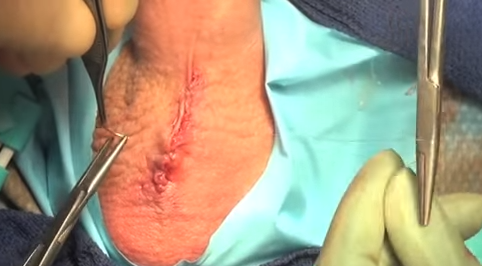
The operation takes 45 to 90 minutes under general or spinal anesthesia. Dr. Taş then reaches the erectile bodies through a small incision, sizes each cylinder and seats the pump in the scrotum. Afterwards you move to a private room.
Discomfort stays mild, and prescribed tablets control it. Meanwhile, a light dressing protects the wound and the nursing team checks you regularly.
Your Week in Istanbul, Day by Day
Our international patient team plans every step, from the airport to your flight home.
Most patients fly home on day 5, although some prefer an extra recovery day. Either way, you leave with a medical summary, digital test results and a follow-up schedule. Read our international patients guide for documents, payment and travel details.
Recovery Timeline After Penile Implant Surgery
Healing follows a predictable curve. Swelling and bruising peak early, then settle steadily.
- Days 1 to 3: Swelling and mild pain, controlled with tablets. Light walking starts immediately.
- Week 1: Wound check before your flight. Desk work resumes for most men.
- Weeks 2 to 4: Swelling subsides. Dr. Taş teaches you to operate the pump at the follow-up visit.
- Weeks 6 to 8: Sexual activity resumes once Dr. Taş confirms full healing.
- Month 3: The device feels routine and the scar fades.
Follow-up continues remotely after you return home. Additionally, you send photographs at agreed intervals, and Dr. Taş reviews them personally. Moreover, the team stays reachable on WhatsApp throughout the healing period.
Penile Implant After Prostate Cancer or With Peyronie's Disease
Radical prostatectomy damages the nerves that trigger erections. Many men recover partially, yet a substantial group never does.
For them, therefore, an implant restores function permanently. Importantly, the device does not interfere with cancer follow-up or PSA testing.
Peyronie's disease creates a different problem. Scar plaque bends the shaft, and severe curvature then blocks penetration. When erectile dysfunction accompanies the curve, Dr. Taş straightens the penis during implant surgery.
Specifically, he achieves this by modelling the shaft over the inflated cylinders. Otherwise he treats the curve on its own. See our Peyronie's disease results page for those outcomes.
Risks, Device Warranty and MRI Safety
Every operation carries risk. Expect swelling, bruising and temporary discomfort during the first weeks. Less commonly, patients face infection, mechanical failure or erosion of a cylinder.
Manufacturers cover mechanical failure with a device warranty, and the terms depend on brand and model. Accordingly, our coordinator hands you the exact warranty document before surgery.
MRI safety raises frequent questions, particularly among prostate cancer patients. Manufacturers label current inflatable implants MR Conditional, so radiologists scan you safely under defined conditions. Always tell the radiology team that you carry a prosthesis.
Penile Implant or Girth Implant? Two Different Operations
Patients often confuse two very different devices, so this distinction matters.
An erectile prosthesis treats erectile dysfunction and therefore sits inside the erectile bodies. A silicone girth implant, marketed as Himplant, sits above them and adds circumference only. Consequently, it changes appearance without treating erectile dysfunction.
Because the girth implant never touches the erectile bodies, it leaves erection, ejaculation and sensation unaffected. If your goal is size rather than function, read our Spartacus Package page or our penis lengthening surgery guide instead.
Why Patients Choose Assoc. Prof. Dr. Tuncay Taş
Dr. Taş is a board-certified urologist and andrology specialist with twenty years of experience. He performs more than 400 penile procedures a year and treats patients from over 60 countries. Furthermore, he operates only in JCI-accredited hospitals and uses FDA-approved, CE-certified devices.
Equally important, he tells patients what surgery cannot do. If tablets still work for you, he will say so before you book a flight. Therefore see real outcomes on our before and after gallery, or read more about Dr. Taş.
This page is for educational purposes only and does not constitute medical advice. Individual results may vary, and all surgical procedures carry risks. Consult a qualified medical professional before making treatment decisions.


Global Patient Services
Each year, Our Clinic treats hundreds of patients from around the world. For patients who travel outside of their home country to receive services at a Istanbul location, our Global Patient Services team offers seamless care designed specifically to your unique needs and culture.
Experienced center
Our pioneer team has experience over 20 years.
Safe Procedure
Our erectile dysfunction and andrology clinic sees male patients with health issues including sexual dysfunction
Our Surgeon
We are a scientist-led clinic specialising in erectile dysfunction and andrology
