


Partial vs Radical Nephrectomy: When Can the Kidney Be Saved?
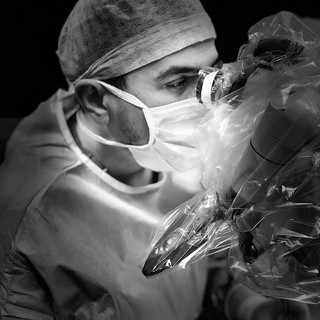
Partial nephrectomy removes only the tumour and keeps the rest of the kidney. Radical nephrectomy, in contrast, removes the whole kidney.
For most kidney tumours under 7 cm in a suitable position, both control the cancer equally well. So keeping the kidney is usually the aim.
Medically reviewed by Assoc. Prof. Dr. Tuncay Taş, urologist. Updated November 2026.
This guide explains how surgeons choose between the two operations. It also covers what robotic surgery changes, how recovery compares and which questions to ask.
The short answer
In practice, three facts decide the choice. These are tumour size, tumour position and how well your kidneys work today.
Tumour up to 4 cm: partial nephrectomy is the standard choice.
Tumour of 4 to 7 cm: partial nephrectomy is often possible, depending on position.
Tumour over 7 cm: radical nephrectomy is more common, although some patients still suit a partial operation.
Tumour in the renal vein: radical nephrectomy, often with removal of the clot of tumour.
One kidney, both kidneys affected or weak kidney function: surgeons try hard to save tissue.
What each operation removes
Partial nephrectomy
The surgeon removes the tumour with a thin rim of healthy tissue around it. Then the surgeon stitches the kidney closed. Doctors also call this nephron-sparing surgery.
First, the surgeon usually clamps the kidney artery for a short time to limit bleeding. In some tumours, however, the operation is possible without any clamp.
Radical nephrectomy
In this operation, the whole kidney comes out with the fat around it. Sometimes the adrenal gland above it also comes out, although surgeons now keep it when they safely can.
After the operation, the other kidney takes over the work. In fact, it grows a little over the following months to carry the extra load.
Partial vs radical nephrectomy at a glance
This table shows a typical robotic or laparoscopic case. Your own figures depend on the tumour and your general health.
Feature | Partial nephrectomy | Radical nephrectomy |
What comes out | The tumour with a thin margin | The whole kidney and its fat |
Typical tumour | Up to 7 cm, in a favourable position | Large, central or growing into the vein |
Cancer control in suitable tumours | Similar | Similar |
Kidney function after | Most of it stays | Total function falls, then partly recovers |
Operating time | 2 to 3 hours | 1.5 to 2.5 hours |
Hospital stay | 2 to 3 nights | 2 to 3 nights |
Main early risks | Bleeding, urine leak | Bleeding, injury to nearby organs |
Technical difficulty | Higher, because the kidney needs stitching | Lower |
How surgeons decide
Tumour size
Generally, size gives the first clue. In the US, the National Cancer Institute lists both operations for early kidney cancer. Even so, partial surgery is now the usual choice for small tumours.
Between 4 and 7 cm, the answer depends more on position. Above 7 cm, however, a partial operation suits only selected cases.
Tumour position
For example, a tumour that bulges out of the kidney is easier to remove alone. By contrast, a tumour deep in the centre sits close to the main vessels and the urine collecting system.
Surgeons often grade this with a nephrometry score, such as the RENAL score. It combines size, depth, closeness to the collecting system and location.
As a result, a higher score means a harder partial operation. Even so, a high score alone does not rule out keeping the kidney.
Kidney function and general health
In addition, kidney function matters more than many patients expect. For example, diabetes, high blood pressure and older age all raise the risk of kidney disease later.
So, for these patients, every bit of saved kidney counts. So surgeons push harder to keep the kidney, even when the tumour is complex.
When saving the kidney is essential
Finally, some situations make partial surgery nearly mandatory. These include a single kidney, tumours in both kidneys and inherited conditions that cause repeated tumours.
In these cases, removing the kidney could even mean dialysis. Therefore, surgeons accept a more demanding operation to avoid it.
Tests that shape the plan
First, a CT scan with contrast shows the tumour, its blood supply and the veins. If you cannot have contrast, an MRI does the same job.
Next, a chest scan checks for spread, and blood tests measure kidney function. In selected cases, a kidney scan also shows how much work each kidney does.
Why keeping the kidney matters
After partial nephrectomy, most people keep about 85 to 90 per cent of their kidney function. After radical nephrectomy, in contrast, total function often falls by about a third at first.
Then, over time, the remaining kidney makes up part of the loss. However, starting from a lower level raises the chance of chronic kidney disease over the years.
In turn, chronic kidney disease links to heart disease and other long-term problems. For that reason, the NIDDK advises regular checks for people at risk.
This is also why guidance favours partial surgery whenever it is safe. In the UK, for example, NICE found laparoscopic partial nephrectomy safe and effective in the hands of surgeons with special expertise.
Cancer control: is partial surgery safe?
For suitable tumours, yes. Indeed, several large studies found similar cancer control after both operations in tumours under 7 cm.
Most kidney cancers show up early. In fact, SEER data from the US show that 66 per cent stay inside the kidney at diagnosis. At that stage, the 5-year relative survival is about 93.6 per cent.
Sometimes the pathologist finds tumour cells at the edge of the removed tissue. Doctors call this a positive margin. However, it is uncommon, and in most cases close follow-up is enough.
What robotic surgery changes
Both operations can be done through small ports with a robotic or laparoscopic approach. However, robotic tools matter most in partial nephrectomy.
With it, the surgeon sees a magnified 3D view and uses wristed instruments. As a result, cutting out the tumour and stitching the kidney become faster and more precise.
For you, this often means less pain and a shorter stay. It also usually means an earlier return to normal life than after open surgery.
The clamp time
During partial nephrectomy, the kidney goes without blood while the clamp stays on the artery. Doctors call this warm ischaemia time. Longer clamping can harm kidney function for good.
Therefore, Assoc. Prof. Taş aims to keep it under 25 minutes. In suitable tumours, he also works without clamping at all.
More kidneys saved
Before robotic surgery, many complex tumours ended with radical nephrectomy. At that time, laparoscopic stitching was slow, and open surgery meant a long cut.
Now, with robotic tools, more patients with complex tumours can keep their kidney. The robotic kidney cancer surgery page explains the approach in more detail.
Assoc. Prof. Taş trained in laparoscopy at Heidelberg University. In addition, he has published research on laparoscopic surgery of the upper urinary tract.
When a planned partial becomes radical
Sometimes the tumour turns out deeper or larger than the scan suggested. In that case, the surgeon may need to remove the whole kidney after all.
Fortunately, this rarely happens in a well-planned case. Even so, your consent form usually covers both operations, so ask your surgeon how likely a change is for you.
Risks compared
Surgeons have performed both operations for decades. Yet each has its own risk pattern.
Risk | Partial nephrectomy | Radical nephrectomy |
Bleeding needing transfusion | Uncommon | Uncommon |
Urine leak from the kidney | Possible, usually settles with a stent or drain | Not applicable |
Delayed bleeding | Rare, may need a small procedure | Very rare |
Positive margin | Uncommon | Very rare |
Chronic kidney disease later | Lower risk | Higher risk |
Conversion to open surgery | Rare in experienced hands | Rare in experienced hands |
In short, partial surgery carries slightly more early risk. In return, it protects your kidney function in the long term.
Recovery after each operation
Overall, recovery is similar after robotic partial and radical nephrectomy. Most of the difference comes from the approach, not the operation.
Recovery point | Robotic or laparoscopic | Open surgery |
Hospital stay | 2 to 3 nights | 4 to 7 nights |
Walking | The same or next day | The next day |
Desk work | After about 2 to 3 weeks | After about 4 to 6 weeks |
Driving | After about 2 weeks | After about 4 weeks |
Heavy lifting | After about 6 weeks | After about 6 to 8 weeks |
First check scan | Usually within 3 to 6 months | Usually within 3 to 6 months |
After a partial operation, avoid heavy lifting for the full 6 weeks. This protects the stitched kidney from late bleeding.
Follow-up after surgery
Follow-up matters after both operations. First, the pathologist reports the tumour type, grade and margins, usually within one to two weeks.
Then the follow-up plan depends on that report. For a small, low-grade tumour, scans are spread out over several years. For a higher-risk tumour, by contrast, they are closer together at first.
Meanwhile, blood tests track kidney function. Together, these checks catch any change early, when it is easier to treat.
Other options for small kidney masses
However, not every small mass needs surgery. For example, some tumours under 3 cm grow very slowly.
Active surveillance: regular scans watch the mass, and treatment starts only if it grows. This suits older patients or those with serious health problems.
Ablation: a needle freezes or heats the tumour through the skin. It suits some small tumours, although local recurrence is more common than after surgery.
A needle biopsy can help with these choices. However, many patients go to surgery without one, because CT or MRI often gives enough detail.
Life after nephrectomy
In general, most people return to a normal life after either operation. Still, a few habits protect the kidney tissue that remains.
Check your blood pressure regularly and treat it if high.
Ask for a yearly blood test of kidney function and a urine protein test.
Avoid regular use of anti-inflammatory painkillers such as ibuprofen.
Keep follow-up scans on schedule, as your urologist advises.
Stay active, keep a healthy weight and stop smoking.
Questions to ask your urologist
A clear plan comes from the scan and from your own priorities. So bring these questions to the consultation.
How large is the tumour, and what is its nephrometry score?
Can my kidney be saved, and if not, why not?
Will the operation be robotic, laparoscopic or open?
How long do you expect to clamp the kidney artery?
What is my kidney function now, and what will it likely be after?
What follow-up scans will I need, and for how long?
Planning surgery from the US, Canada or the UK
In most cases, kidney cancer surgery is a planned operation, not an emergency. So you have time to gather your CT or MRI, blood tests and a list of medicines.
Typically, patients from abroad stay in Istanbul for about 7 to 10 days. That covers tests, the operation, recovery in hospital and a check before the flight home. The urologic oncology department page describes the wider cancer care team.
When to see a urologist
See a urologist promptly if a scan shows a kidney mass, even without symptoms. Also, blood in the urine always needs a check, even once and without pain.
A dull ache in the side or a lump in the abdomen also deserves attention. Unexplained weight loss or fever counts too.
To plan an assessment in person, book a consultation with Assoc. Prof. Taş or message the team on WhatsApp. After the consultation, patients receive a personal plan and quote.
Frequently asked questions
Is partial nephrectomy as effective as radical nephrectomy?
For most tumours under 7 cm that suit it, yes. Cancer control is similar after both operations. Partial nephrectomy has the added benefit of keeping more working kidney tissue.
What size kidney tumour can be removed with partial nephrectomy?
Partial nephrectomy is the standard choice for tumours up to 4 cm. Between 4 and 7 cm, it is often possible when the tumour sits in a favourable position. Above 7 cm, radical nephrectomy is more common, although partial surgery suits some patients.
Why would a surgeon choose radical nephrectomy?
A surgeon may choose radical nephrectomy when the tumour is large, sits deep in the centre of the kidney or grows into the renal vein. It may also suit when little healthy kidney would remain after a partial operation.
Can you live a normal life with one kidney?
Yes. Most people live a normal life with one healthy kidney. Even so, yearly checks of blood pressure, urine protein and kidney function help protect it.
Is robotic partial nephrectomy better than open surgery?
Robotic surgery uses small cuts, so pain is lower and the stay is shorter than after open surgery. Its wristed tools also make stitching the kidney easier, which helps keep clamp time short. Cancer control depends on the tumour and the surgeon, not only on the tool.
How long is recovery after nephrectomy?
After robotic or laparoscopic surgery, most people stay 2 to 3 nights and return to desk work in about 2 to 3 weeks. Heavy lifting usually waits about 6 weeks after both partial and radical operations.
Do I need a biopsy before kidney surgery?
Not always. A CT or MRI often gives enough detail to plan surgery. A needle biopsy helps when the result could change the plan, for example in a small mass where active surveillance or ablation is an option.
Sources
About the reviewer
Assoc. Prof. Dr. Tuncay Taş is a urologist in Istanbul with more than 20 years of experience and patients from over 60 countries.
He graduated from Istanbul University in 2004 and trained at Taksim Training and Research Hospital. Then he completed a uro-oncology and laparoscopy fellowship at Heidelberg University, and he belongs to the EAU and the Endourological Society. Read his full profile.


Comments