


Penile Implant for Peyronie's Disease: Straightening, Device Choice and Results
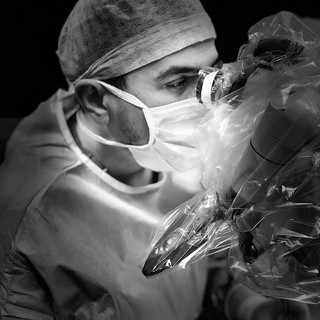
A penile implant is the main surgical option when Peyronie's disease and erectile dysfunction occur together. In most men, it restores a firm erection and straightens the curve in one operation.
Some men need only the implant. Others, however, need modeling, plication or a graft on top. Overall, the angle, the scar and any length loss shape the plan.
Medically reviewed by Assoc. Prof. Dr. Tuncay Taş, urologist. Updated November 2026.
Below, we explain who suits an implant and how surgeons straighten the penis. We also cover device choice, length, recovery and travel from the US, Canada and the UK.
The short answer
In Peyronie's disease, a scar, or plaque, forms in the wall of the erectile chambers. As a result, the penis bends, narrows or shortens during erection. Many men also lose erection quality, partly because the scar affects blood flow.
When tablets no longer give a usable erection, an implant treats both problems at once. In other words, the cylinders give rigidity, and the straightening steps deal with the bend.
Question | Short answer |
Who is it for? | Men with Peyronie's disease and erectile dysfunction |
Does it straighten the penis? | Yes, alone or with an extra step in the same operation |
Must the disease be stable first? | Yes, usually stable for three to six months |
Does it restore lost length? | No, it keeps the length present at surgery |
Usual device | Three-piece inflatable implant |
Who is a candidate
An implant suits men whose erections are no longer firm enough for sex despite treatment. Usually, that means tablets have failed or work only partly. In addition, the Peyronie's disease should be in its stable phase.
Erections decide between implant and straightening alone
Men with Peyronie's disease and good erections do not need an implant. Instead, plication or a graft straightens the penis and keeps natural erections. The Peyronie's disease treatment page describes these operations.
By contrast, straightening alone does not help a man whose erections are weak. Grafting can even reduce erection quality further. So in that group, an implant offers the more reliable result.
Situation | Usual surgical route |
Firm erections, curve under about 60 degrees, enough length | Plication on the side opposite the curve |
Firm erections, severe curve or hourglass narrowing | Plaque incision or partial excision with a graft |
Weak erections that do not respond to tablets | Penile implant, with straightening steps as needed |
Disease still active, with pain or a changing curve | No surgery yet; review again later |
Why the two problems often come together
Peyronie's disease and erectile dysfunction share several risk factors, such as diabetes, smoking and age. In addition, the scar itself can disturb how the erectile chambers trap blood. As a result, some men lose rigidity behind the plaque even when the rest of the shaft works well.
Anxiety plays a part too. For example, a man who expects a painful or awkward bend may lose his erection before sex begins. So treating only the curve can leave the real problem in place.
For these reasons, the assessment always checks erection quality as well as the angle. A Doppler ultrasound after an injection shows blood flow and helps decide between straightening alone and an implant.
Why stability comes first
In the active phase, the scar is still forming. Therefore, surgery at this stage can leave a new bend once the plaque matures. For this reason, surgeons usually wait until pain settles and the curve stays unchanged for three to six months.
For the difference between the two phases, read Peyronie's disease: acute vs stable phase. Also, if you are unsure whether your bend counts as a disease at all, see how much penile curvature is normal.
How surgeons straighten the penis during implant surgery
Straightening follows a stepwise plan in one operation. In short, the surgeon moves to the next step only if a clear bend remains. This approach keeps extra surgery to a minimum.
Implant alone: the cylinders act as an internal splint. For mild curves, this is often enough.
Manual modeling: next, the surgeon bends the fully inflated penis against the curve to stretch the scar. If needed, the surgeon repeats it.
Plication: then, stitches on the opposite side pull the shaft straight.
Plaque incision and graft: finally, for a stubborn curve, the surgeon cuts the scar and patches the gap.
Manual modeling
In practice, surgeons add modeling more often than any other step. First, the surgeon protects the tubing and pump. Then the surgeon holds the inflated penis bent the opposite way for about a minute or more.
The scar stretches and often cracks slightly. Afterward, the surgeon checks the angle again. In general, a small bend under about 20 to 30 degrees rarely affects sex.
When the surgeon adds a graft
Some curves stay above about 30 degrees despite modeling. In such cases, the surgeon releases the scar and closes the opening with graft material. A graft can also help with severe narrowing, sometimes called an hourglass deformity.
Grafting adds time and a little risk. For example, some men notice reduced sensation in the head of the penis for a period afterward. Your surgeon discusses this before the operation.
Which implant suits Peyronie's disease?
Most men choose a three-piece inflatable implant. It gives a firm erection and a soft, natural look when deflated. Moreover, its inflated cylinders give the surgeon a stable frame for modeling.
Device | How it expands | Point for Peyronie's disease |
Inflatable, girth-expanding cylinders | Width only | Common choice; firm support for modeling |
Inflatable, length and girth cylinders | Width and some length | Used with care, since expansion can follow the scar |
Narrow or scar-friendly cylinders | Width only, smaller base | Useful when the chambers are scarred and narrow |
Malleable implant | No expansion; bendable rods | Option for limited hand strength or simpler care |
In fact, each brand offers more than one cylinder type. For example, the AMS 700 range includes girth-only and length-and-girth models, and the Coloplast Titan expands in girth. For a side-by-side look, read AMS 700 vs Coloplast Titan.
A malleable device stays semi-rigid all the time. Nevertheless, it straightens the penis just as well and suits some men. The malleable penile implant page explains this option.
Length and girth with Peyronie's disease
Peyronie's disease often shortens the penis before any surgery. The scar does not stretch during erection, so the whole shaft becomes shorter. An implant does not reverse that.
In effect, the cylinders fill the chambers to their length at the time of surgery. Still, a straight erection often looks and feels longer than a bent one. In addition, regular inflation over months can stretch the tissue a little.
Some centres offer complex length-restoring techniques together with an implant. However, these carry higher risks, so they suit only selected men. For realistic expectations about size, see does a penile implant make you bigger.
Risks to understand
Overall, the risks are mostly the same as with any penile implant. However, straightening steps add a few specific points.
Infection: the main early risk with any implant. Antibiotic-coated devices and a strict no-touch technique lower it.
Residual curve: a small bend can remain. Often it improves with regular inflation.
Sensation change: more likely after grafting; it often improves over months.
Urethral or cylinder injury: rare, but modeling needs care for this reason.
Mechanical failure: a part may need replacing years later.
For infection signs and treatment, see penile implant infection. Similarly, how long does a penile implant last covers device lifespan.
Recovery and the first months
In general, recovery resembles a standard implant. Most men go home after one or two nights. Then swelling and bruising settle over two to three weeks.
Time after surgery | Typical stage |
Days 1 to 2 | Hospital stay; implant often left partly inflated at first |
Weeks 1 to 3 | Swelling and soreness fade; light walking |
Weeks 4 to 6 | Activation and first full inflations with the team |
Months 2 to 6 | Regular inflation helps keep the penis straight |
Many surgeons ask men with Peyronie's disease to inflate the device daily for a set time over the first months. This gentle stretching helps maintain the correction. For the inflation steps, read how to inflate a penile implant.
What results to expect
Most men can expect a firm, reasonably straight erection that allows sex. Even so, the result rarely matches the penis before the disease began. Clear expectations therefore matter as much as the surgery itself.
Aspect | Realistic expectation |
Rigidity | Firm enough for sex, on demand |
Straightness | Straight or a small bend under about 20 degrees |
Length | Similar to the length just before surgery |
Sensation and orgasm | Usually unchanged; sometimes reduced after grafting |
Appearance when soft | Natural with an inflatable device |
Sensation and orgasm mostly stay the same, because the nerves run outside the cylinders. For more on feeling, see does a penile implant feel natural.
Partners also benefit from a frank talk before surgery. For instance, some fear that a straightened penis may feel different or cause pain. In most cases, hearing the plan together eases these worries.
Common misunderstandings
A few beliefs often delay the right decision. Here are the ones we hear most in clinic.
"The implant removes the plaque": it does not. Instead, it supports and straightens the shaft around the scar.
"I must try every injection first": not always. If erections are weak, straightening without an implant rarely helps.
"A longer cylinder adds length": no. Oversized cylinders cause pain and can damage tissue.
"Any bend after surgery means failure": no. A small bend often eases with regular inflation.
How Assoc. Prof. Taş plans the operation
First, planning starts with an assessment of the erect penis. Usually, an injection test in the clinic shows the true angle and any narrowing. In addition, photos you took at home help.
Assoc. Prof. Taş performs both curvature surgery and implant surgery. Consequently, he can plan every straightening step within one operation. The penile implant page describes the operation and device types.
A curve present since puberty is a different condition with different surgery. For that, see congenital penile curvature surgery.
Questions to ask before you decide
Ideally, a consultation covers the curve, the device and your expectations. So write your questions down and bring them, ideally with your partner.
Stability: is my disease stable enough for surgery now?
Straightening: will I likely need modeling, plication or a graft?
Device: which cylinder type suits my curve and chambers?
Length: what length can I realistically expect after surgery?
Sensation: how could grafting affect feeling in the head of the penis?
Aftercare: how often should I inflate the device in the first months?
Planning surgery from the US, Canada or the UK
Men often travel when local waiting lists are long. Also, some want one surgeon to handle both the curve and the implant. In that case, bring photos of the erect penis from above and from the side.
Generally, you stay in Istanbul for about a week, and the first check happens before you fly. Then activation follows at four to six weeks, in Istanbul or locally. Your personal plan follows the in-person consultation.
Before you book flights, it also helps to gather a short history. For instance, note when the curve began, when pain stopped and which treatments you tried. Likewise, list any tablets that helped and how well.
Travel home is usually comfortable after a week. Still, long flights call for loose clothing, regular walks in the aisle and plenty of water. Meanwhile, your surgeon stays in touch for questions until activation.
When to see a urologist
See a urologist if a bend makes sex difficult or painful. Also, seek advice if erections have weakened alongside the curve. Likewise, seek a review if a lump, narrowing or shortening appears.
To plan an assessment in person, book a consultation with Assoc. Prof. Taş or message the team on WhatsApp. Patients from the US, Canada and the UK receive a personal plan after the consultation. Then the coordinator arranges the days in Istanbul.
Frequently asked questions
Can a penile implant fix Peyronie's disease?
An implant does not remove the scar plaque, but it can straighten the penis and restore firm erections. In most men, the implant alone or with modeling gives a straight enough erection. A few need an extra step such as plication or a graft.
Which penile implant suits Peyronie's disease?
Most surgeons use a three-piece inflatable implant, often with cylinders that expand in girth only. Alternatively, a malleable implant suits some men. Your surgeon chooses the model after measuring the curve and the erectile chambers.
Will I lose length with an implant for Peyronie's disease?
The implant does not add length. Instead, it fills the chambers to their length at surgery, and the disease has often shortened the penis already. Straightening can make the penis look longer, but lost length usually does not fully return.
What is manual modeling during implant surgery?
Modeling is a straightening step that follows cylinder placement. First, the surgeon inflates the cylinders fully and bends the penis gently against the curve. Often, the surgeon repeats it until the curve is small enough.
Should my Peyronie's disease be stable before an implant?
Yes. Surgeons usually wait until pain has settled and the curve has stopped changing for at least three to six months. Operating during the active phase risks a new bend after surgery.
Is an implant better than plication for Peyronie's disease?
They suit different men. Plication or grafting without an implant fits men whose erections are still firm. An implant fits men who also have erectile dysfunction that does not respond to tablets.
How long is recovery after an implant for Peyronie's disease?
Recovery is similar to a standard implant. Most men go home after one or two nights and start using the device at four to six weeks. Then sex resumes once the surgeon confirms healing, and regular inflation helps keep the penis straight.
Sources
About the reviewer
Assoc. Prof. Dr. Tuncay Taş is a urologist in Istanbul with more than 20 years of experience and patients from over 60 countries. He graduated from Istanbul University in 2004, trained at Taksim Training and Research Hospital, completed a uro-oncology and laparoscopy fellowship at Heidelberg University and belongs to the EAU and the Endourological Society. Read his full profile.


Comments