


RIRS vs PCNL vs ESWL: Which Kidney Stone Procedure Fits Which Stone?
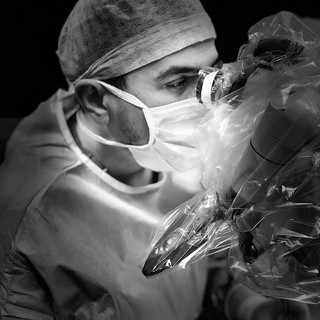
RIRS, PCNL and ESWL all treat kidney stones, but each suits a different stone. In short, ESWL suits small, soft stones. RIRS suits most stones up to 2 cm, while PCNL suits stones over 2 cm.
Beyond size, stone hardness, position and your own health also shape the choice.
Medically reviewed by Assoc. Prof. Dr. Tuncay Taş, urologist. Updated November 2026.
This guide compares the three procedures side by side. It also explains why the same stone may suit one person and not another. Finally, it lists the questions worth asking before you agree to a plan.
The short answer
All three aim to leave the kidney free of stone with little strain on you. However, they reach the stone in very different ways. So the right one depends on the stone's position and makeup.
Kidney stone under 1 cm: ESWL is often a fair first choice, while RIRS suits hard stones or when ESWL is not possible.
Kidney stone of 1 to 2 cm: RIRS or ESWL, and RIRS usually clears more in one session.
Kidney stone over 2 cm or a staghorn stone: PCNL, because it removes a large stone load in one go.
Stone in the lower part of the kidney: RIRS or mini PCNL, since fragments drain poorly after ESWL.
Hard stone on CT: RIRS or PCNL, because hard stones often resist shock waves.
Stones in the ureter, the tube below the kidney, follow a slightly different path. There, a semi-rigid scope called a ureteroscope often does the job. Our kidney stone size guide covers that path.
How each procedure works
ESWL: shock waves from outside
ESWL stands for extracorporeal shock wave lithotripsy, and many people call it SWL.
You lie on a table, and a machine aims shock waves at the stone. Meanwhile, X-ray or ultrasound guides the aim. Then the stone cracks into small pieces that pass in the urine over days or weeks.
No scope enters the body. In addition, most people need only pain relief or light sedation and go home the same day.
RIRS: a flexible scope and a laser
RIRS stands for retrograde intrarenal surgery, also called flexible ureteroscopy.
The surgeon passes a thin, bendable scope through the urethra and bladder. Then it travels up the ureter into the kidney. Next, a holmium or thulium laser turns the stone into dust or small fragments.
There is no cut on the skin. Afterwards, a thin tube called a stent often stays in the ureter for a week or two.
PCNL: a small tunnel through the back
PCNL stands for percutaneous nephrolithotomy.
Under general anaesthesia, the surgeon makes a small opening in the back. From there, a tunnel leads straight into the kidney. Then a scope breaks the stone with a laser or ultrasound probe, and suction removes the pieces.
Mini PCNL uses a tunnel under 1 cm wide, so bleeding is lower than with the standard version. In many cases, the surgeon closes the wound without leaving a drainage tube.
RIRS vs PCNL vs ESWL at a glance
These are typical ranges for an uncomplicated case. Your own figures depend on the stone, the kidney and your general health.
Feature | ESWL | RIRS | PCNL |
How it reaches the stone | Shock waves through the skin | Flexible scope through the urethra | Tunnel through the back |
Typical kidney stone | Under 1 to 2 cm, soft | Up to 2 cm, any hardness | Over 2 cm or staghorn |
Anaesthesia | Pain relief or light sedation | General or spinal | General |
Cut on the skin | None | None | Under 1 cm in mini PCNL |
Hospital stay | Usually none | Day case or 1 night | 1 to 3 nights |
Stent or tube | Rarely | Often, for 1 to 2 weeks | Sometimes; mini PCNL is often tubeless |
Stone free after one session | Lower, often needs a repeat | High for stones up to 2 cm | Highest for large stones |
Back to desk work | 1 to 2 days | 2 to 3 days | About 1 to 2 weeks |
Main drawback | Fragments must pass on their own | Stent discomfort | Higher bleeding risk |
RIRS vs PCNL: the 2 cm question
For stones between about 1.5 and 2.5 cm, the two procedures overlap. In this zone, the choice often comes down to stone load, position and your priorities.
RIRS avoids a cut and usually means a shorter stay. On the other hand, a large stone may need two sessions, because the laser works slowly on a big load. PCNL, by contrast, usually clears it in one session.
So, if a single procedure matters most to you, PCNL often wins above 2 cm. If avoiding a wound matters more, staged RIRS remains an option. In fact, UK guidance from NICE lists it for people who cannot have PCNL.
RIRS vs ESWL: where shock waves fall short
ESWL is gentle and needs no scope. Even so, it relies on the body to pass the fragments, and some stones simply do not break well.
Hard stones
Doctors measure stone hardness on a CT scan in Hounsfield units. Stones above about 1,000 units often resist shock waves. In fact, Assoc. Prof. Taş co-authored a study that linked stone density to ESWL success in ureter stones.
Density also matters for RIRS, although less. In a later study he co-authored, patients left with fragments after RIRS had harder stones on average. They also had larger and more numerous stones.
Lower-pole stones
Fragments from the lowest part of the kidney must travel uphill to drain. As a result, ESWL clears these stones less often, especially above 1 cm. For that reason, RIRS or mini PCNL usually suit a lower-pole stone better.
Position during treatment can help, however. Assoc. Prof. Taş co-authored a randomised study of 740 patients on this. In it, a head-down tilt raised the lower-pole stone-free rate from 73 to 81%.
Body build and distance
Shock waves weaken as they travel through tissue. So ESWL works less well with a deep stone or a larger body. In that case, RIRS often becomes the more reliable route.
PCNL vs ESWL: large stones
For stones over 2 cm, ESWL rarely clears everything. Moreover, a large mass of fragments can block the ureter on its way down. Doctors call this a stone street.
For this reason, NICE recommends PCNL for kidney stones over 2 cm, including staghorn stones. ESWL, in contrast, stays a choice for smaller and softer stones.
How many sessions to expect
One session is the goal, but it is not always the result. In fact, the chance of a second session differs clearly between the three.
After ESWL, a repeat session is common, especially for stones over 1 cm. After RIRS, a second look is sometimes needed for a large or hard stone. PCNL, in contrast, most often finishes the job in one go.
So, when you compare options, count the whole journey. Two short sessions may still suit you better than one bigger operation, or the other way round.
Recovery compared
Recovery depends more on the procedure than on the stone. This table shows a typical path after each one.
Recovery point | ESWL | RIRS | PCNL |
Going home | Same day | Same day or next morning | After 1 to 3 nights |
Blood in the urine | A few days | A few days | A few days |
Passing fragments | Days to weeks, sometimes with colic | Mostly removed during surgery | Mostly removed during surgery |
Stent removal | Rarely needed | After about 1 to 2 weeks | If placed, after 1 to 2 weeks |
Driving | Next day, if not on strong painkillers | After a few days | After about 1 to 2 weeks |
Heavy lifting and gym | After a few days | After about 1 week | After about 4 weeks |
Check scan | After 4 to 6 weeks | After 4 to 6 weeks | After 4 to 6 weeks |
Risks and side effects
All three procedures are routine. Still, each has its own pattern of risk, and your urologist weighs it against your health.
ESWL
Bruising and blood in the urine are common for a day or two. Then, as fragments pass, some people get colic and need pain relief. If a stone street forms, a short ureteroscopy may clear it.
ESWL is not suitable in pregnancy or with an untreated urine infection. Likewise, blood thinners that cannot pause safely usually rule it out.
RIRS
The stent can cause urgency, a need to pass urine often and some discomfort in the side. Fortunately, these settle once the stent comes out. In addition, a fever after surgery needs prompt care, because infected stones can release bacteria.
Sometimes the ureter is too narrow for the scope on the first attempt. In that case, the surgeon places a stent first. Then the second attempt follows a week or two later, once the ureter has widened.
PCNL
Bleeding is the main concern, because the tunnel passes through kidney tissue. However, a transfusion is uncommon, and mini PCNL lowers the risk further.
Rarely, the tunnel can affect the bowel or the lining of the lung. So careful planning on CT matters.
What your CT scan decides
A low-dose CT without contrast gives most of the facts the decision needs. In practice, your urologist looks at five things on it.
Size of the stone, measured at its longest point.
Number of stones and their combined size.
Position within the kidney, especially the lower pole.
Hardness in Hounsfield units.
Shape of the drainage system, including any narrowing or pouch.
Some stones hide in a small pouch off the drainage system, called a calyceal diverticulum. RIRS can often reach them. For example, in a study Assoc. Prof. Taş co-authored, RIRS cleared such stones in 26 of 30 patients.
Special situations that change the choice
Some health conditions change the order of options. Here are the most common ones.
Blood thinners: RIRS is often possible without stopping them. By contrast, ESWL and PCNL usually need a pause agreed with your doctor.
Pregnancy: ESWL and PCNL are not used. Instead, a stent or a gentle ureteroscopy is the usual route if a stone needs treatment.
Infection with a blocked kidney: drainage comes first. Then stone treatment follows once the infection clears.
Only one kidney: the plan aims for full clearance with the lowest risk. So RIRS or mini PCNL often comes before repeated ESWL.
Repeated stones: a stone analysis and urine tests matter as much as the procedure itself.
When robotic surgery comes in
A few kidneys need more than a scope. For example, a stone may sit above a narrowing where the kidney meets the ureter. In that case, robotic surgery can remove the stone and repair the narrowing in one operation.
The kidney stone surgery page explains when this route suits, along with each option in more detail.
Questions to ask your urologist
A good plan joins the scan with your own priorities. So bring these questions to the consultation.
How large and how hard is my stone, and where does it sit?
What are my chances of being stone free after one session?
Will I need a stent, and for how long?
Do my blood thinners or other medicines change the choice?
What happens if fragments remain?
Will you analyse the stone to help prevent the next one?
After the stone: preventing the next one
About half of people who form one stone form another within 10 years. So treatment is only half the job.
Drink enough to pass about 2.5 litres of urine a day, and keep salt moderate. Also ask for a stone analysis, because the advice differs for calcium, uric acid and other stone types.
When to see a urologist
See a urologist if a stone causes repeated pain or blood in the urine. Likewise, a stone that has not passed after 4 to 6 weeks needs a plan.
Some signs need urgent care. These include fever or chills with side pain and vomiting that stops you drinking. Pain that tablets do not control also counts.
Above all, a blocked and infected kidney is an emergency.
To plan an assessment in person, book a consultation with Assoc. Prof. Taş or message the team on WhatsApp. After the consultation, patients from the US, Canada and the UK receive a personal plan and quote.
Frequently asked questions
Which is better, RIRS or PCNL?
It depends on the stone. For a kidney stone under 2 cm, RIRS usually clears it with no cut and a shorter stay. For a stone over 2 cm or a staghorn stone, PCNL clears more stone in one session, so it usually suits better.
Is RIRS better than ESWL?
RIRS clears more stones in one session, especially hard stones and stones in the lower part of the kidney. ESWL needs no scope and no anaesthetic tube, but more people need a second session. For a soft stone under 1 cm, ESWL is often a fair first choice.
What is the difference between PCNL and ESWL?
ESWL breaks the stone with shock waves from outside the body, and the fragments pass in the urine. PCNL removes the stone through a small tunnel in the back. PCNL suits large stones, while ESWL suits smaller and softer ones.
Will I need a stent after RIRS?
Often, yes. Many surgeons leave a thin stent for about 1 to 2 weeks after RIRS to protect drainage while swelling settles. In a short, uncomplicated case, some patients go without one.
Which kidney stone procedure is the least painful?
ESWL usually needs only pain relief or light sedation, and most people go home the same day. RIRS takes place under anaesthesia, so the procedure itself is painless, although a stent can cause discomfort. PCNL causes the most soreness at first, because of the small wound in the back.
Can a kidney stone come back after treatment?
Yes. About half of people who have one stone form another within 10 years. Drinking enough to pass about 2.5 litres of urine a day and a stone analysis lower that chance.
Sources
About the reviewer
Assoc. Prof. Dr. Tuncay Taş is a urologist with more than 20 years of experience and patients from over 60 countries.
He graduated from Istanbul University in 2004 and trained at Taksim Training and Research Hospital. Then he completed a uro-oncology and laparoscopy fellowship at Heidelberg University, and he belongs to the EAU and the Endourological Society. Read his full profile.


Comments